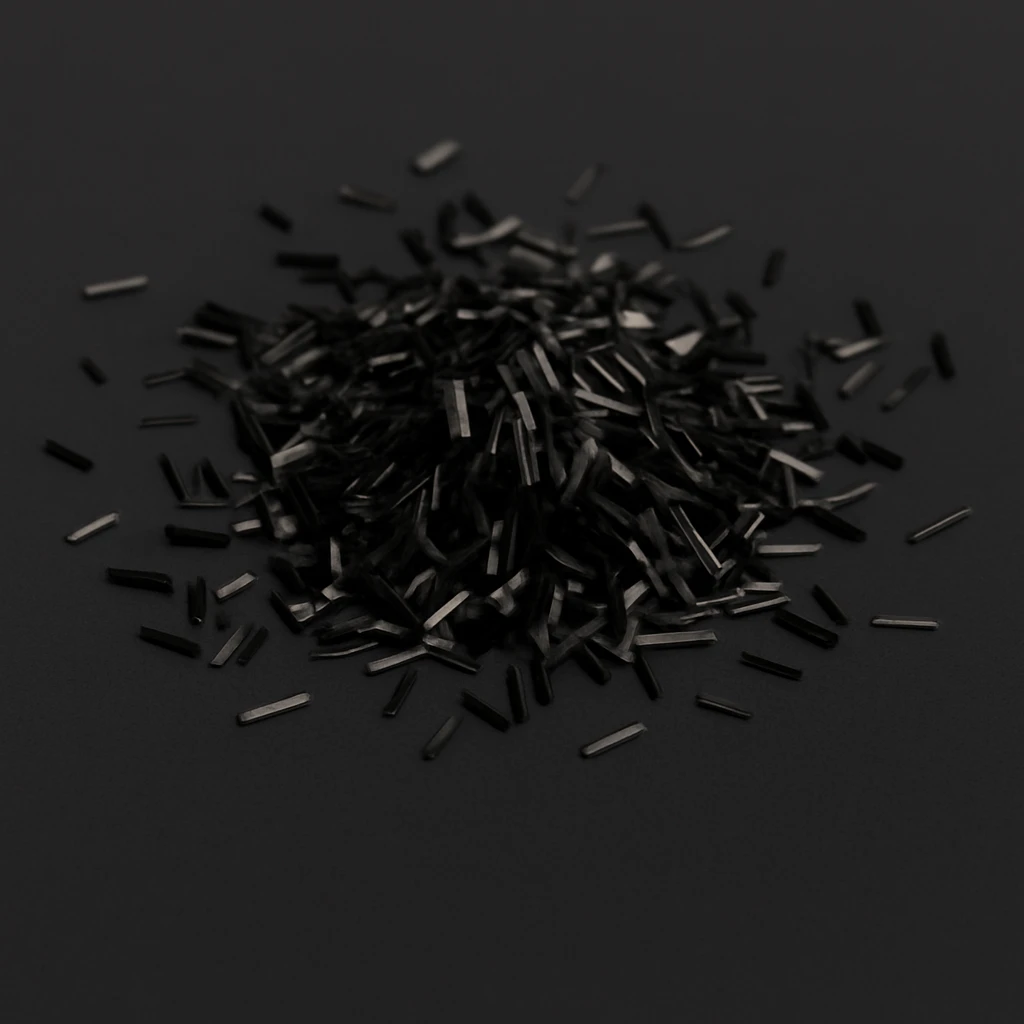
Chopped carbon fibre: it reinforces, and it conducts.
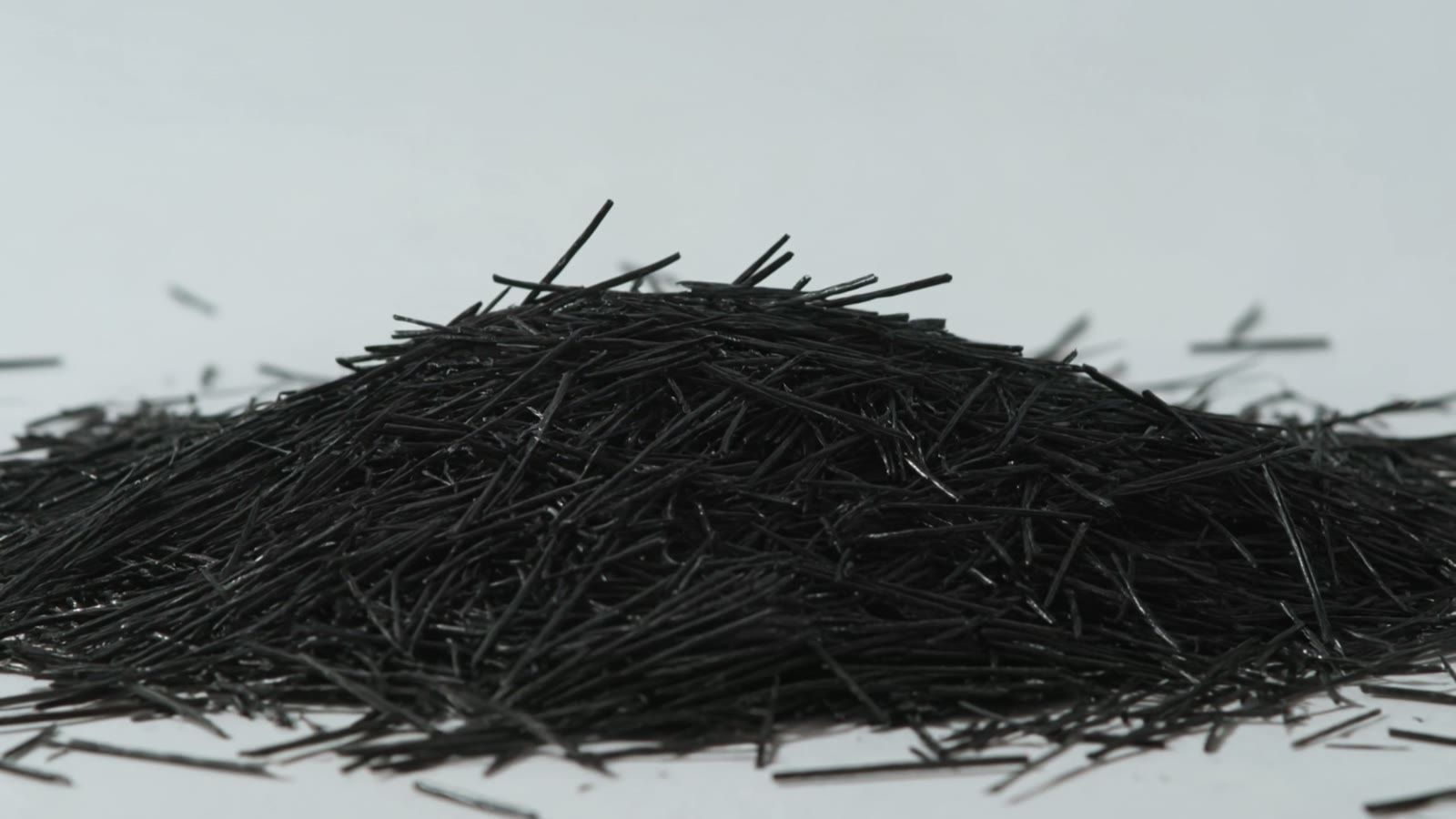
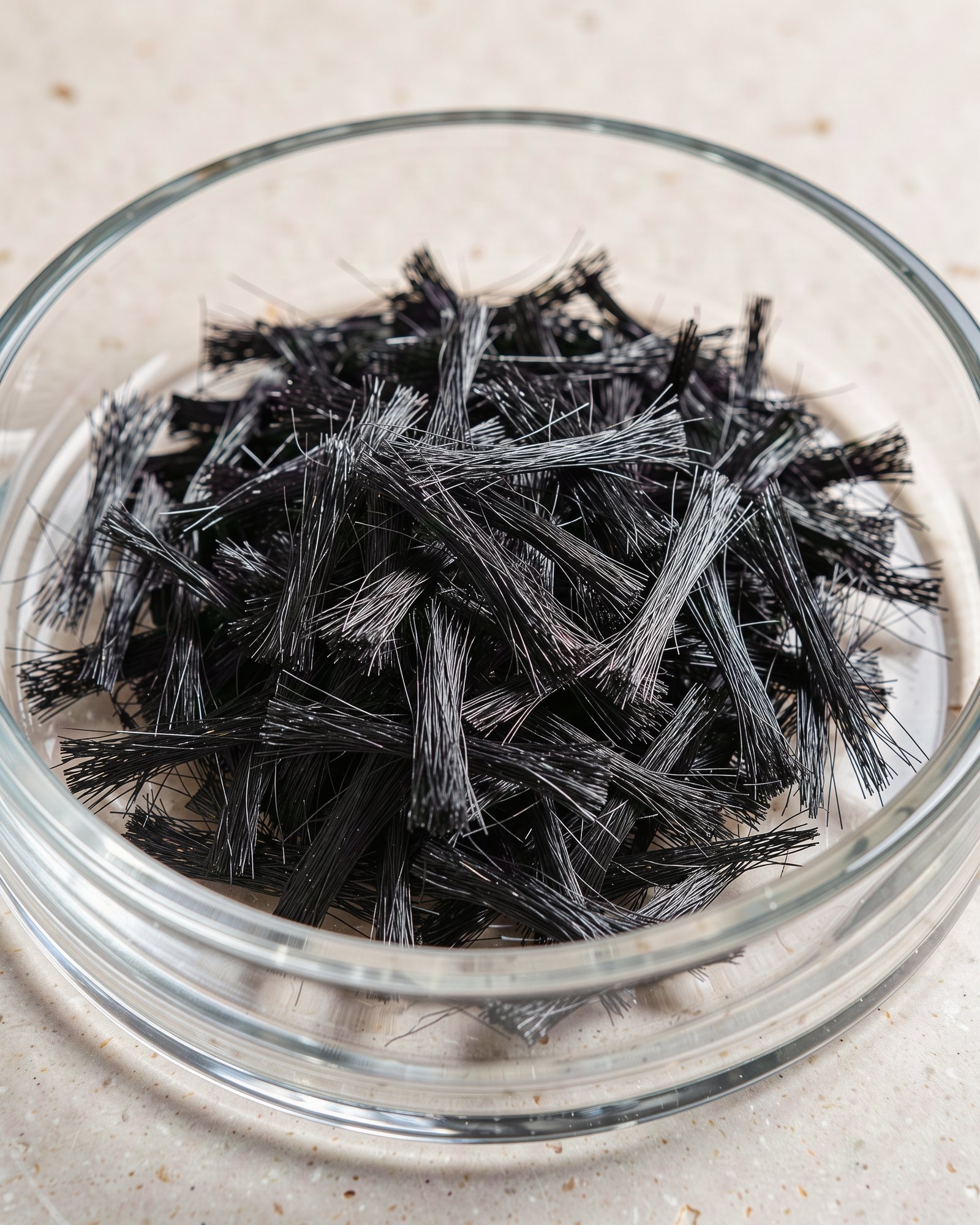
Chopped carbon fibre, 1–20 mm. The 1 mm and 2 mm grades are cut from virgin tow; longer lengths come from recycled and offcut carbon fibre. For reinforcing engineering thermoplastics and adding conductivity.
Evenly dispersed in the resin, the carbon fibre is both a skeleton and a conductive network.
Mechanical reinforcement
Takes a plain resin from ordinary plastic to a structural grade that holds screws and long-term loads.
Tensile strength
>250MPa
Flexural modulus
>12GPa
With 30% high-strength CfCTM in PA66, tensile strength exceeds 250 MPa and flexural modulus exceeds 12 GPa.
EMI shielding and static dissipation
Fibres touch to form a conductive network that can replace metal plating or other conductive fillers.
Volume resistivity
10⁻³Ω·cm
Carbon fibre itself has a volume resistivity in the 10⁻³ Ω·cm range. Suited to semiconductor carriers, battery module housings and electronics structures.
Chopped carbon fibre
Two base fibres, chosen by use.
At the same diameter, strength and conductivity trade off: choose high-strength for structure, high-conductivity for shielding.
Tensile strength
4,900MPa
Tensile modulus
250GPa
Fibre diameter
7μm
Volume resistivity
1.55×10⁻³Ω·cm
Strength: high strength > standard modulus > high conductivity
Conductivity: high conductivity > standard modulus > high strength
Three sizings for different resins.
The sizing decides how well the fibre bonds with the resin.
PU 2.5%
PA6 · PA66 · PP · PE
Sizing level
2.5 %
Bulk density
450 g/l
Moisture
< 0.20 %
General-purpose polyurethane sizing: the most widely used, volume-priced and steadily supplied.
PI 1.8%
PEEK · PEI
Sizing level
1.8 %
Bulk density
400 g/l
Moisture
< 0.20 %
Polyimide sizing for high temperatures; for aerospace, medical and semiconductor carriers.
PU 2.0%
PC · PPS
Sizing level
2.0 %
Bulk density
420 g/l
Moisture
< 0.20 %
Mid-level polyurethane sizing that balances reinforcement and dispersion.
Four product lines, five lengths.
Every grade is a standard product, packed 20 kg per box.
3 mm6 mm10 mm12 mm20 mm
Carbon paper and nonwovens
Chopped, not re-sized
For plastic compounding
Conductive and EMI grade
1 · 2mm
1 mm and 2 mm chopped carbon fibre cut from virgin tow, produced in-house.
Engineering plastic formulation
Carbon paper and nonwovens: longer fibres without re-sizing, keeping the original surface; for wet-laid carbon paper, needle-punched or hydroentangled nonwovens and fuel-cell gas diffusion layers.
10 · 20 mm
Chopped, not re-sized: keeps the fibre’s original surface, for customers who design their own treatment, pair it with a specific resin, or use it in development.
3 · 6 · 12 mm
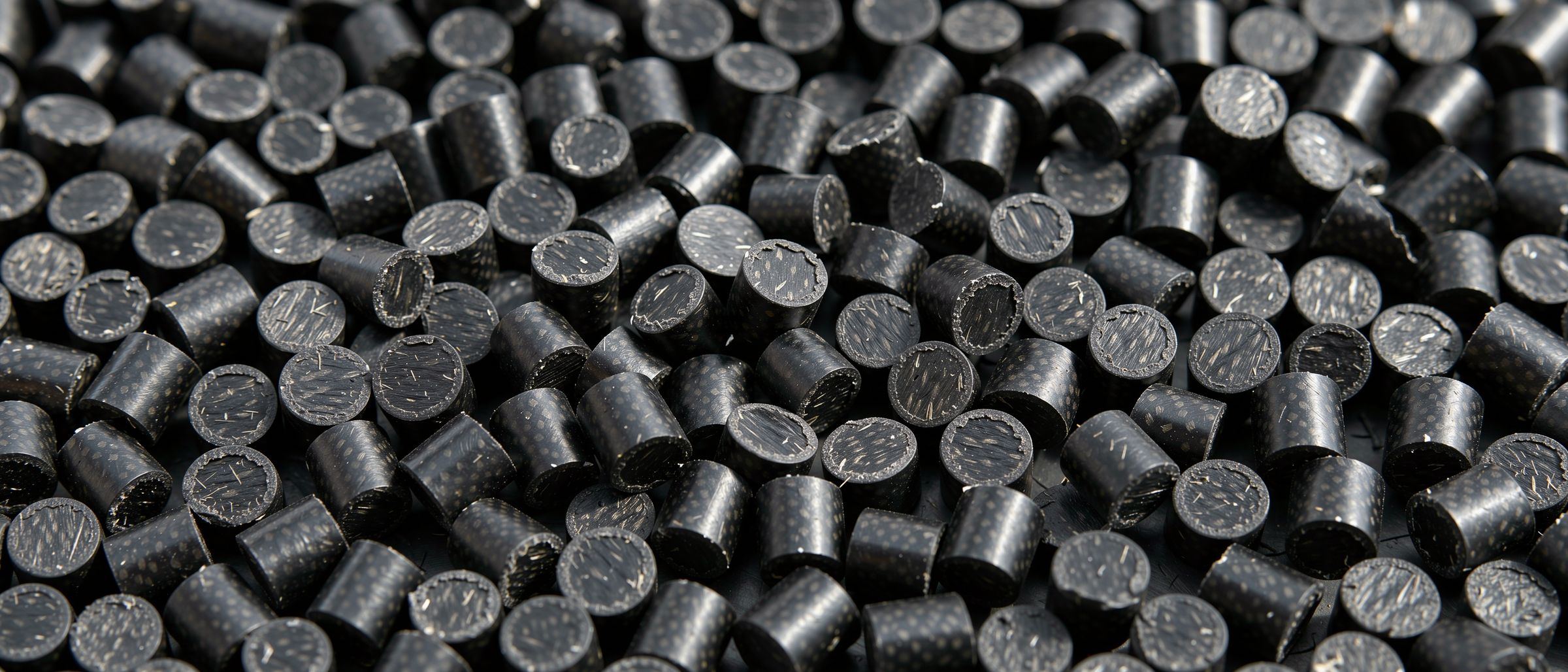
For plastic compounding: re-sized with polyurethane or polyimide for better resin compatibility; the standard feedstock for compounding engineering plastics, in standard-modulus or high-strength grade.
3 · 6 · 12 mm
Conductive and EMI grade: a surface treatment designed for conductive networks, on high-conductivity base fibre, for EMI shielding, static dissipation, semiconductor carriers and battery module housings.
3 · 6 mm
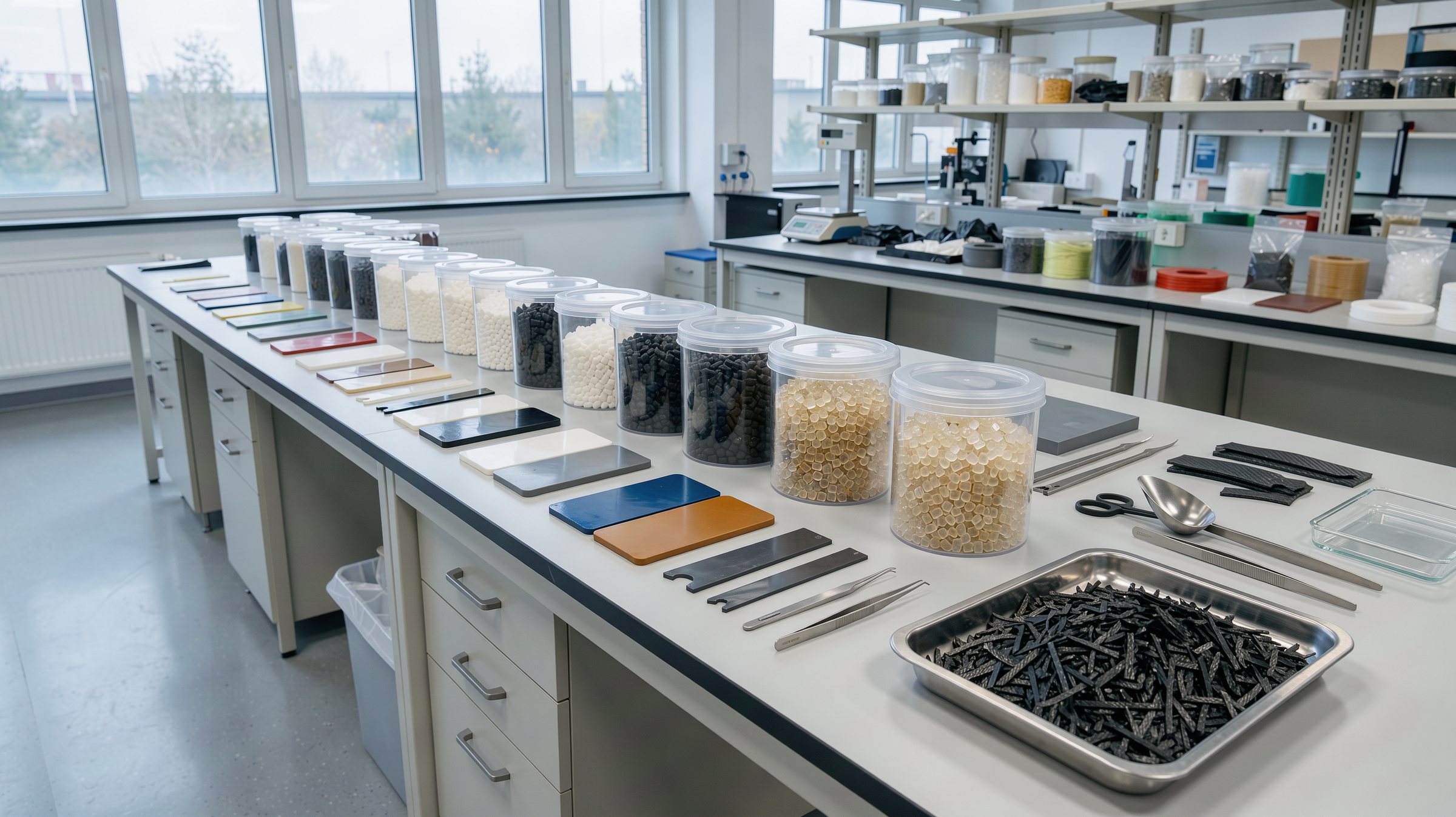
Compatible engineering plastics.
These matrices are validated; other resins can be specified.
Carbon-fibre-reinforced plastic pellets
PA6Volume production
PA66Heat-resistant structures
PCImpact-resistant
PPLight, high-volume
PEGeneral purpose
MPPOModified, heat-resistant
POMSelf-lubricating
PBTElectrical insulation
PPSChemical-resistant, flame-retardant
PEEKHigh heat resistance
PEIHigh heat resistance
OthersOn request
Add 30%, and this is what changes.
Nominal mechanical properties of PA66 with 30% CfCTM. Actual values depend on mould flow, fibre dispersion and post-processing.
Standard modulusHigh strength
Tensile strength
>177 MPa
>250 MPa
Flexural strength
>230 MPa
>300 MPa
Flexural modulus
>9.9 GPa
>12 GPa
Notched impact strength
>11 kJ/m²
>12 kJ/m²
Where it is used.
Injection-moulded and extruded parts that need reinforcement plus shielding or static control.
Automotive structures
Electronics structural housings
EMI shielding enclosures
Battery module housings
Semiconductor carriers
Machine structures
Sports equipment
Static-dissipative parts
Bring CfCTM into your next engineering plastics project.
A 200 g sample, mechanical validation, formulation advice and matrix compatibility testing. We supply the material and develop to your needs.
 邁向五十週年TOWARD FIFTY